

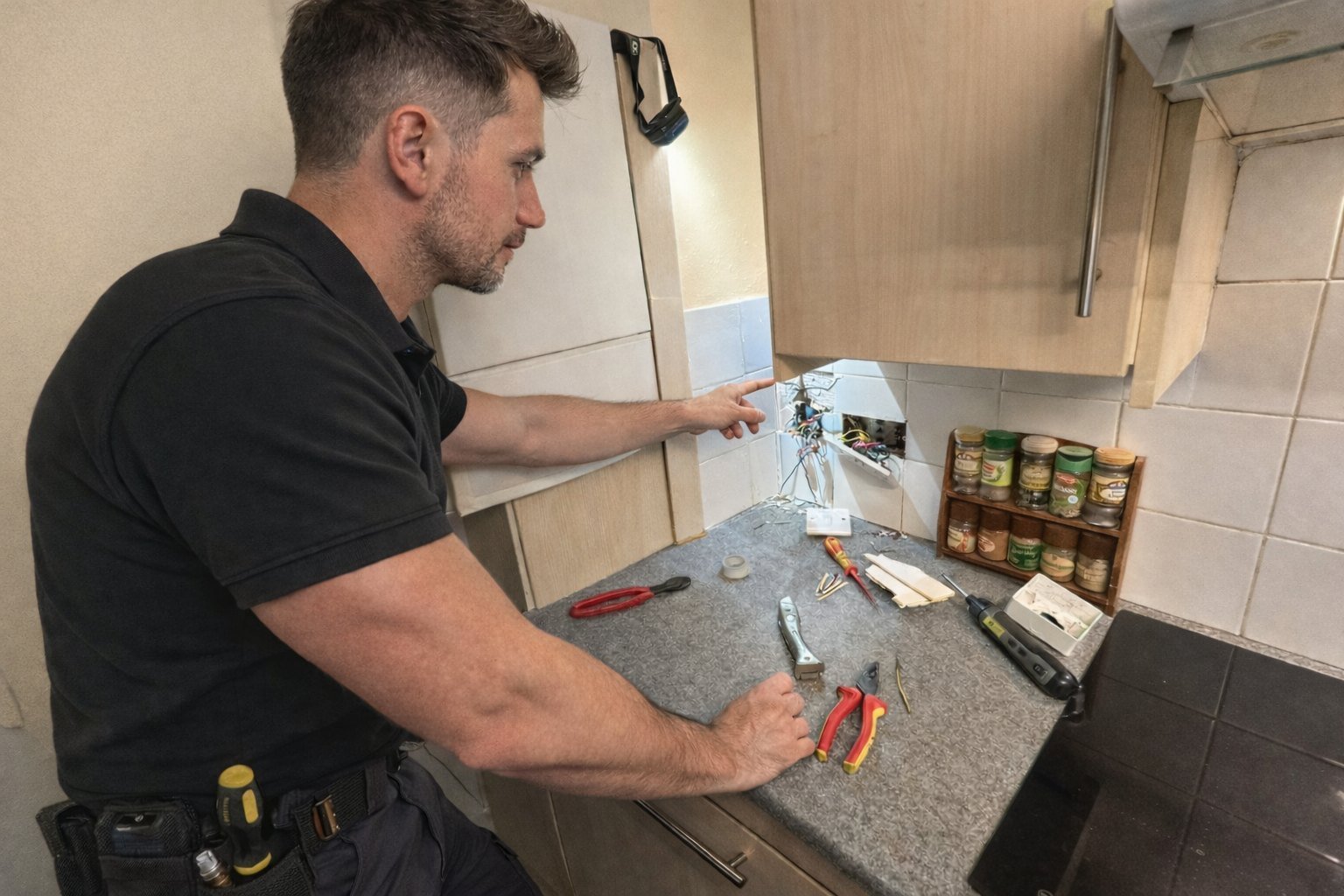
Why your RCD keeps tripping
Resetting it again and again is not a fix. The device is telling you that current is going somewhere it should not.
What an RCD is looking for
A residual current device compares the current flowing out on the line conductor with the current returning on the neutral. In a healthy circuit they match. If around 30 milliamps goes missing, it is leaking to earth, possibly through a person, and the device disconnects in well under 40 milliseconds.
That sensitivity is the point. It is also why a slightly damp outside light or a tired immersion heater element can bring the whole board down.
The safe way to narrow it down
- Switch off every circuit breaker protected by the RCD that tripped.
- Reset the RCD. If it will not stay on with every circuit off, the fault is in the board itself or the device has failed. Stop here and call us.
- Switch the circuits back on one at a time, waiting a few seconds after each. The one that drops the RCD is your suspect circuit.
- Unplug everything on that circuit and try again. If it holds, plug appliances back one at a time until it trips.
- If it trips with nothing plugged in, the fault is in the fixed wiring and needs testing with an insulation resistance meter.
Stop and call if: you can smell burning, there are scorch marks anywhere, the board is warm to the touch, the RCD will not reset with all circuits off, or anyone has had a shock. Do not keep resetting a device that is protecting you.
The usual culprits
- Outside circuits after rain. Garden lights, pond pumps and outbuilding supplies are the most common single cause.
- Immersion heaters and showers. Heating elements fail to earth as they age, often tripping only when they reach temperature.
- Washing machines and dishwashers. Small amounts of leakage that only appear mid cycle.
- Cumulative leakage. Several appliances each leaking a little, adding up to the trip threshold on a shared RCD. This is exactly what individual RCBOs solve.
- Damaged cable. A screw or nail through a cable during other work, sometimes months earlier.
Why one faulty kettle takes out your whole house
On older split load boards, a single RCD protects half the circuits. One fault anywhere on that half disconnects all of it, which is why people come home to a warm freezer and a dark hallway. Replacing the board with individual RCBOs means only the faulty circuit goes off. It is the single most useful upgrade in most older Sussex homes.
Still not right? Our emergency line is answered around the clock on 01273 095564. If it can wait until morning, we will tell you.
Related advice and services
Fault finding and repairs
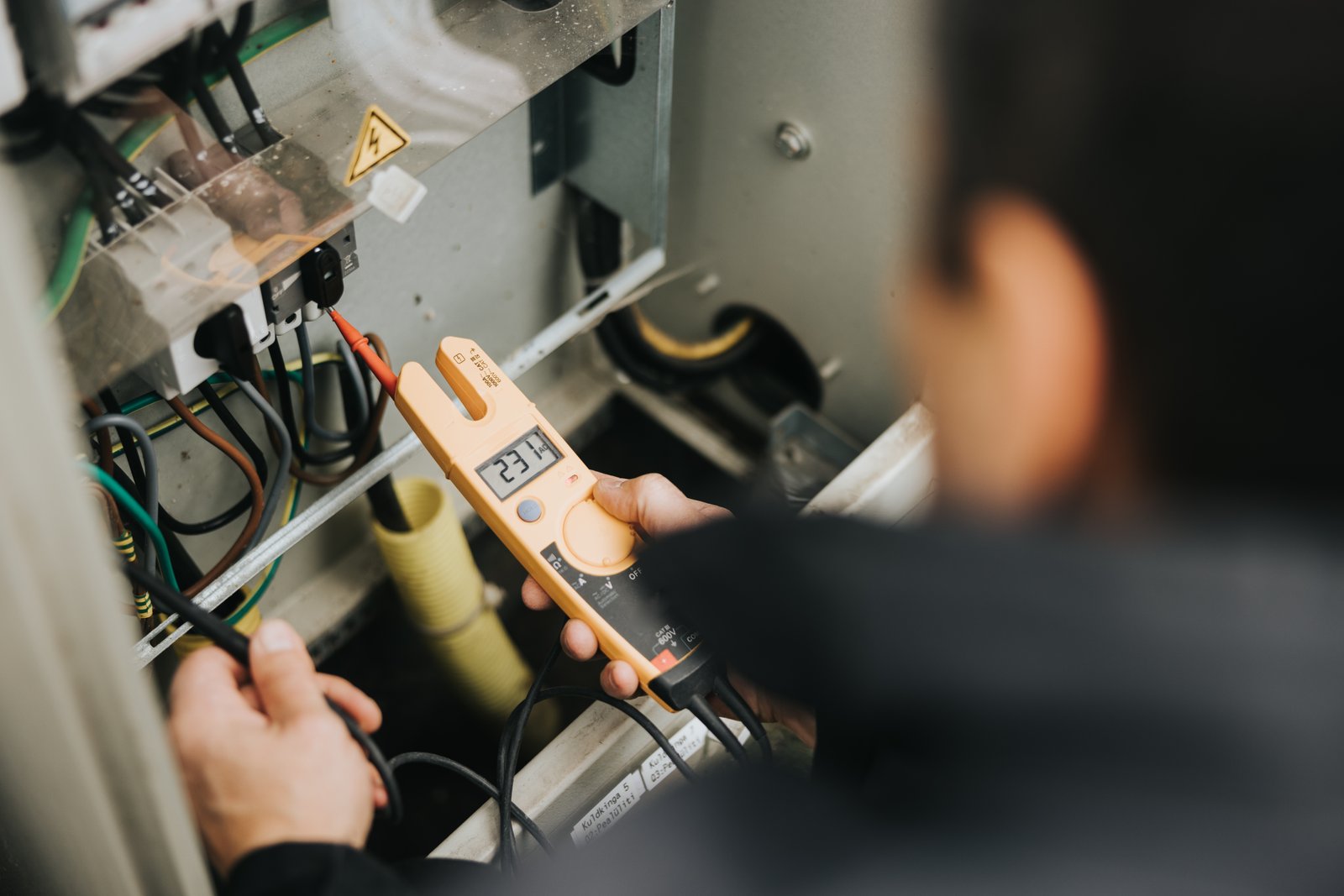
An RCD that keeps tripping, sockets not working, lights flickering, or power dropping out for no obvious reason. Intermittent electrical faults are the ones that cost people money. We use continuity, insulation resistance and RCD testing to prove the cause rather than guess at it, then repair it once and retest.
Read more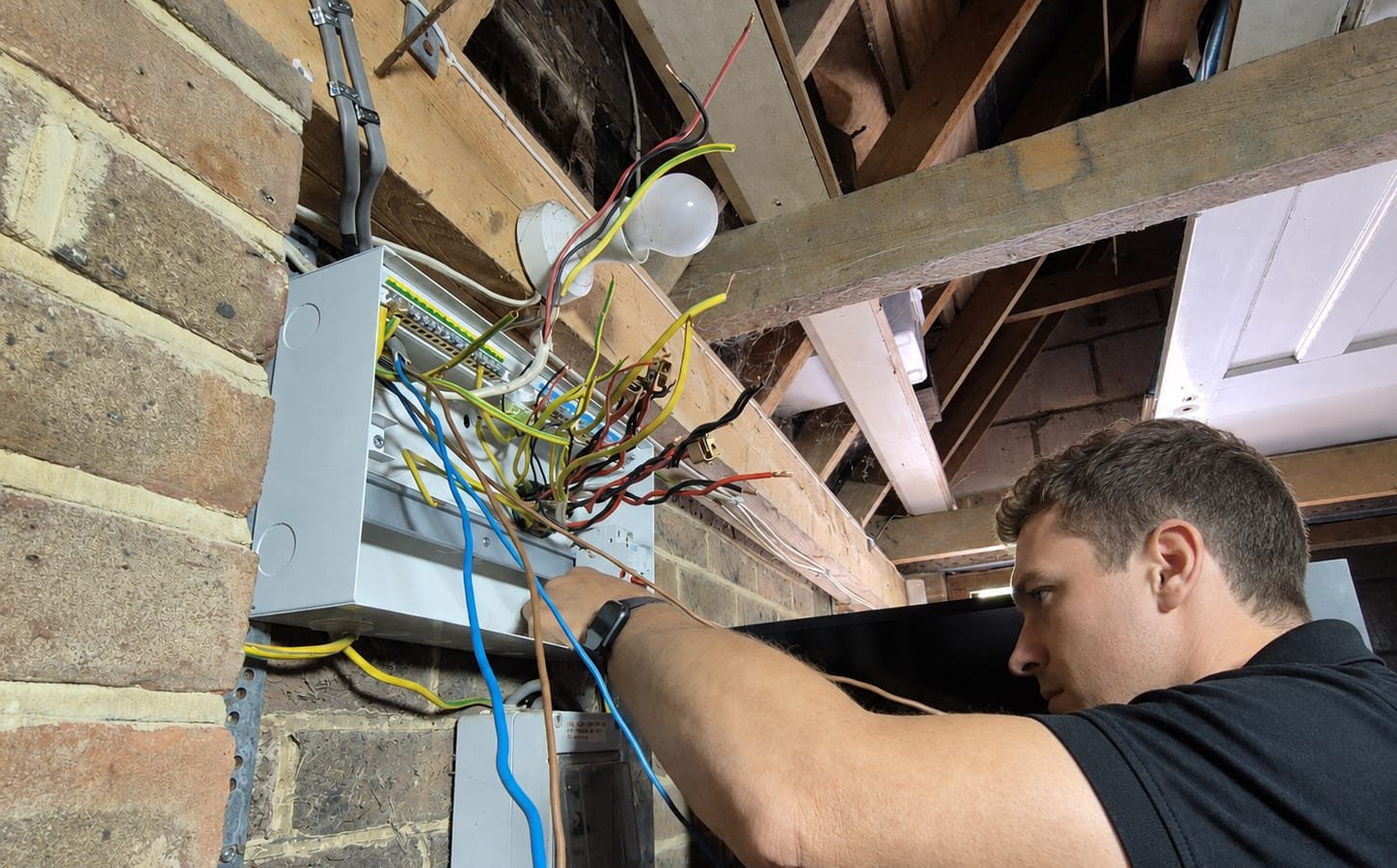
Fuse board and RCD upgrades
Fuse box replacement and consumer unit upgrades, from old rewireable fuses to a metal board with an RCBO on every circuit. A modern board protects each circuit on its own, so one faulty appliance no longer takes the whole house out. Tested, certified and notified under Part P, usually in a day.
Read more
What to do in a power cut
Half the emergency calls we take during bad weather are network faults. Two minutes of checking tells you which one you have.
Read moreLights out, burning smell or a tripping fuse board? Call us now.
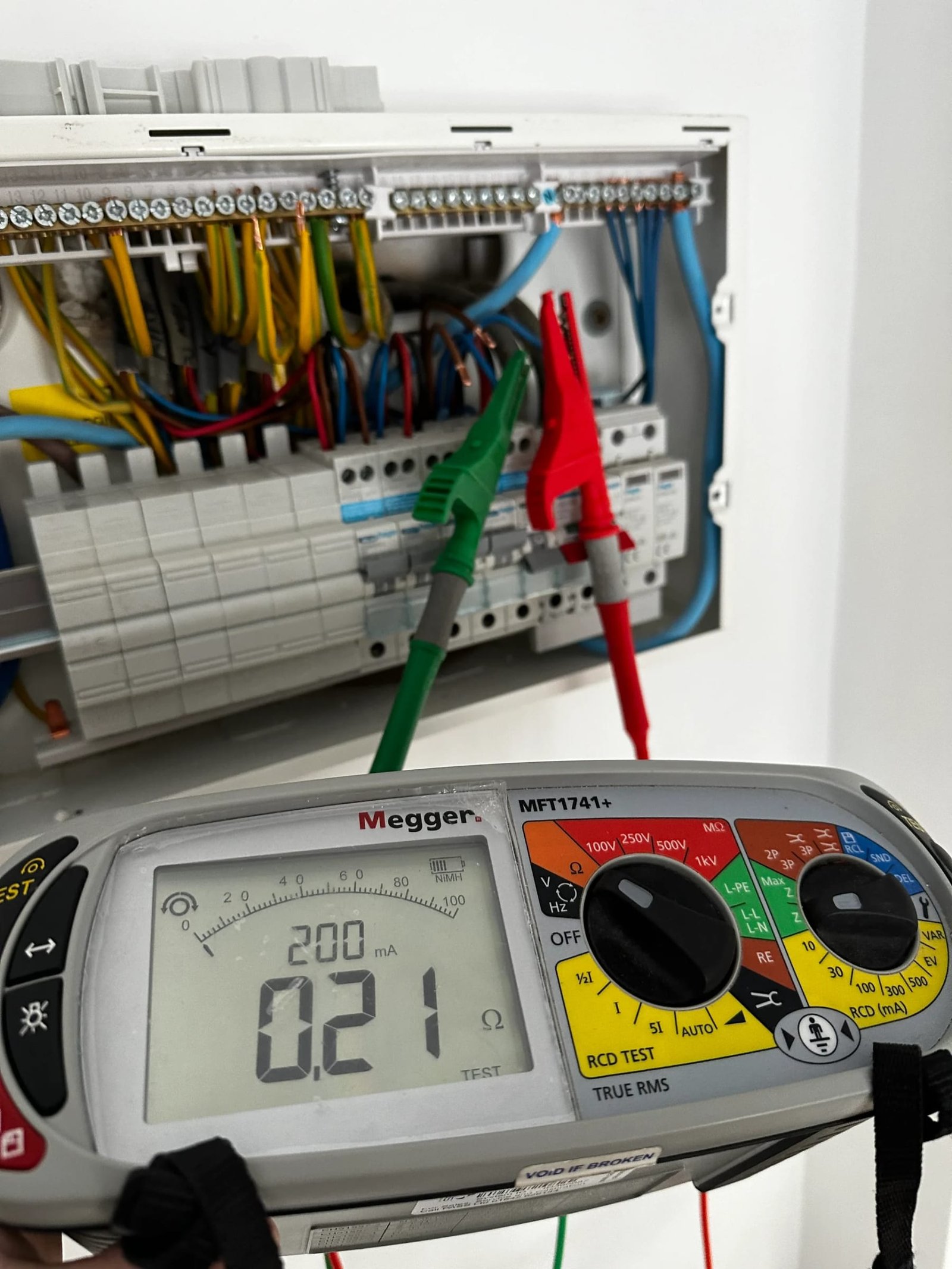
Trusted emergency electricians in Sussex
We have been covering Sussex for 25 years. In that time the wiring regulations have moved through several editions and consumer units have changed shape more than once, while the faults themselves have stayed much the same: loose connections running hot, tired cable, and protection that was never fitted in the first place.
That experience is the difference between guessing and knowing. It is also why we can usually tell you on the phone whether a fault needs a van tonight or a booking on Tuesday, which saves you the out of hours rate more often than you might expect.
TO CONFIRM: add the year you started trading, your scheme registration number and your public liability cover. Only list credentials you can evidence.