

Fault finding and repairs
Intermittent faults are the ones that cost people money. We test until the cause is proved, then repair it once.
Finding the fault, not just the symptom
Anyone can reset a breaker. The skill is working out why it went in the first place: a nail through a cable, water in an outside light, a failing immersion element, a neutral shared between two circuits, or a heater drawing more than the cable was ever sized for.
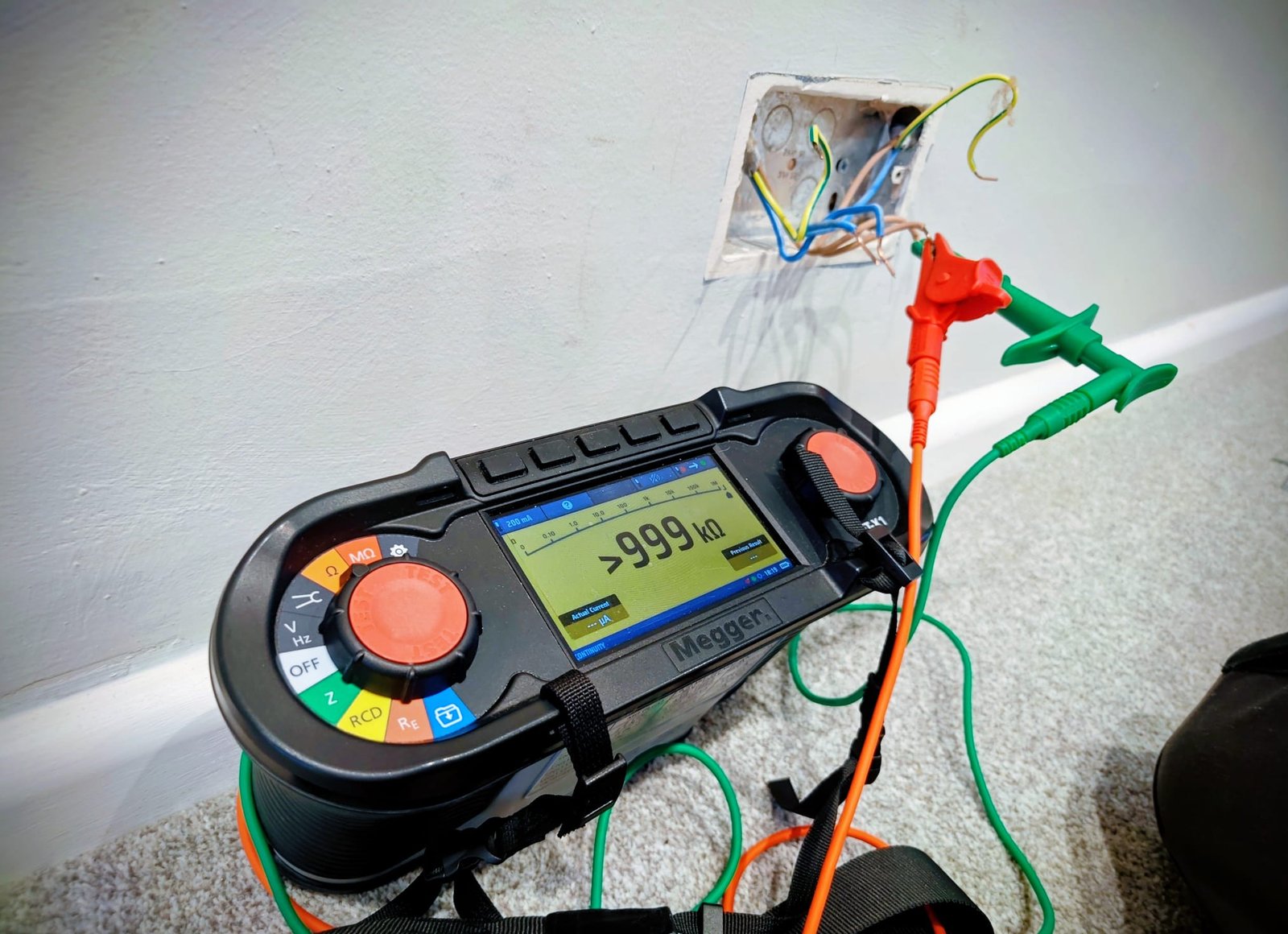
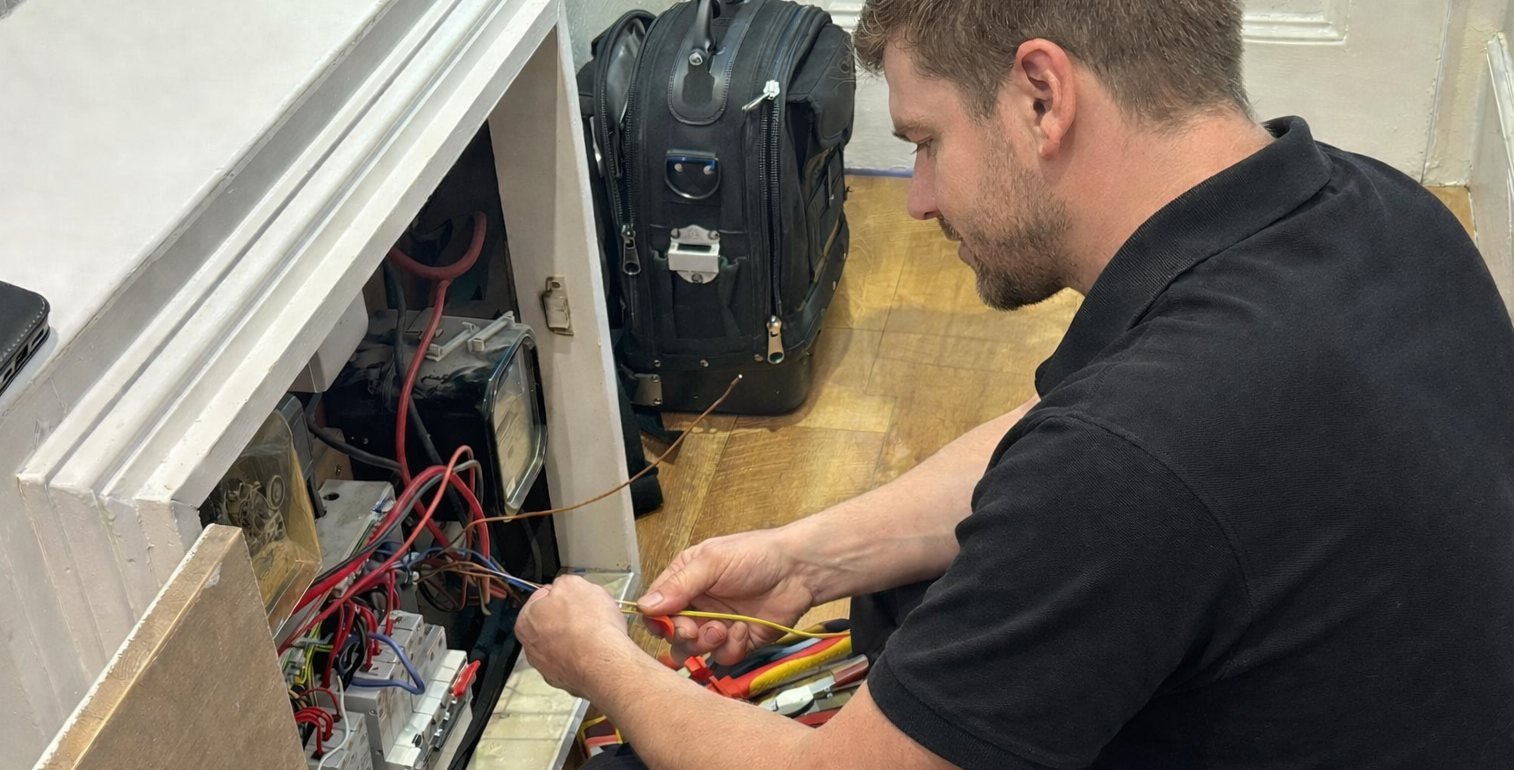
We work through the installation methodically. Circuits are isolated, insulation resistance is measured between every combination of conductors, and the fault is narrowed down to a section of cable or a single accessory before anything is cut open.
That means less chasing of plaster, fewer floorboards up, and a repair that lasts.
Call 01273 095564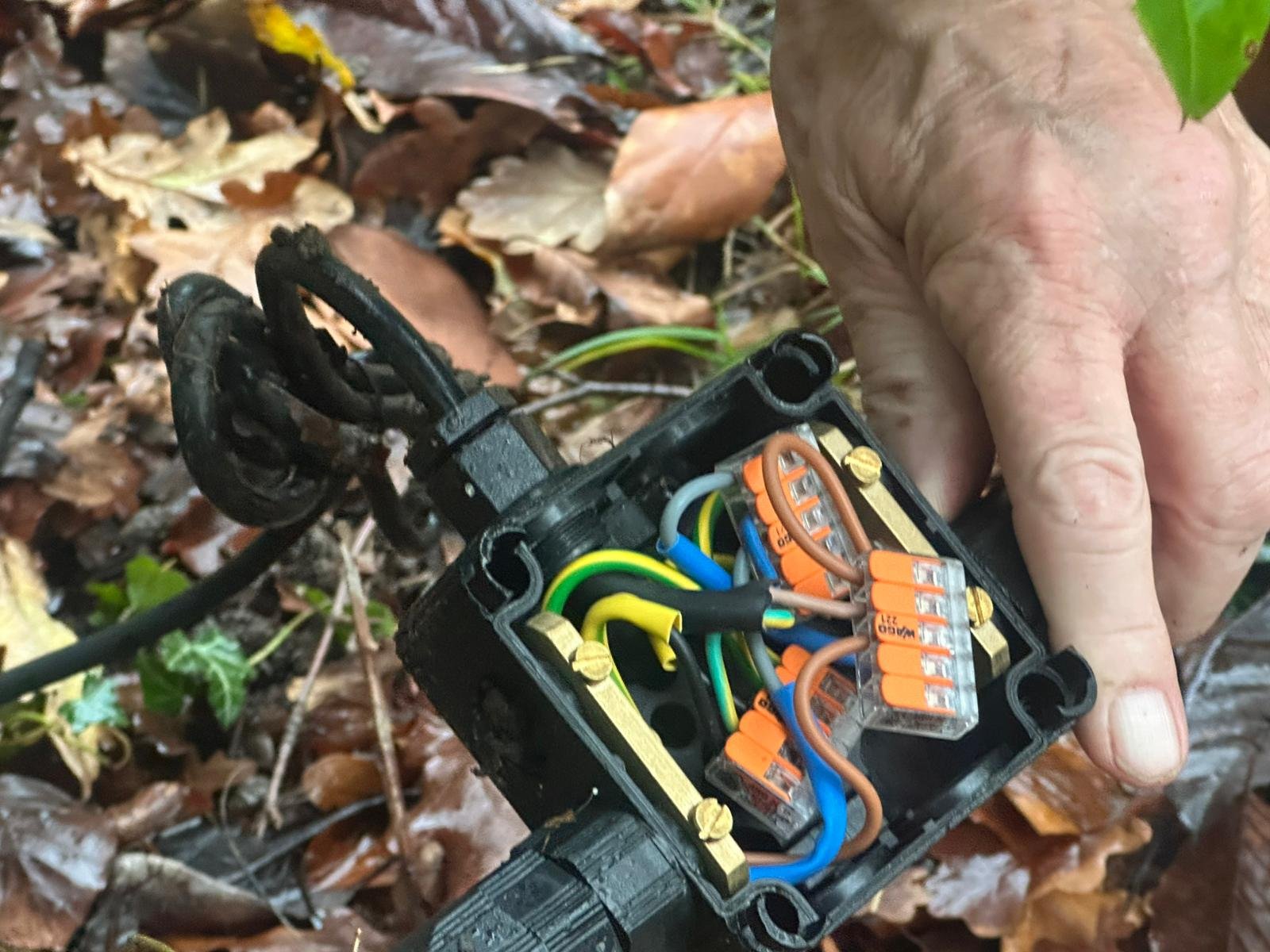
Faults we are called to most
Electrical faults announce themselves in a handful of recognisable ways. Knowing which one you have tells us what to bring and roughly how long it will take.
RCD nuisance tripping
The RCD drops for no obvious reason, often at night or after rain. The cause is earth leakage, and it is frequently cumulative: several appliances each leaking a small amount, adding up to the trip threshold rather than one obvious culprit. Outdoor circuits, immersion heaters and washing machines are the usual contributors, and separating them means splitting the board down circuit by circuit.
MCB or RCBO tripping
A single circuit trips under load. That is either a genuine overload from too much running at once, a short between conductors somewhere in the cable or an accessory, or a protective device that has weakened with age and now operates below its rating. Testing separates the three, because swapping the device when the fault is in the wiring only moves the problem along.
Dead sockets
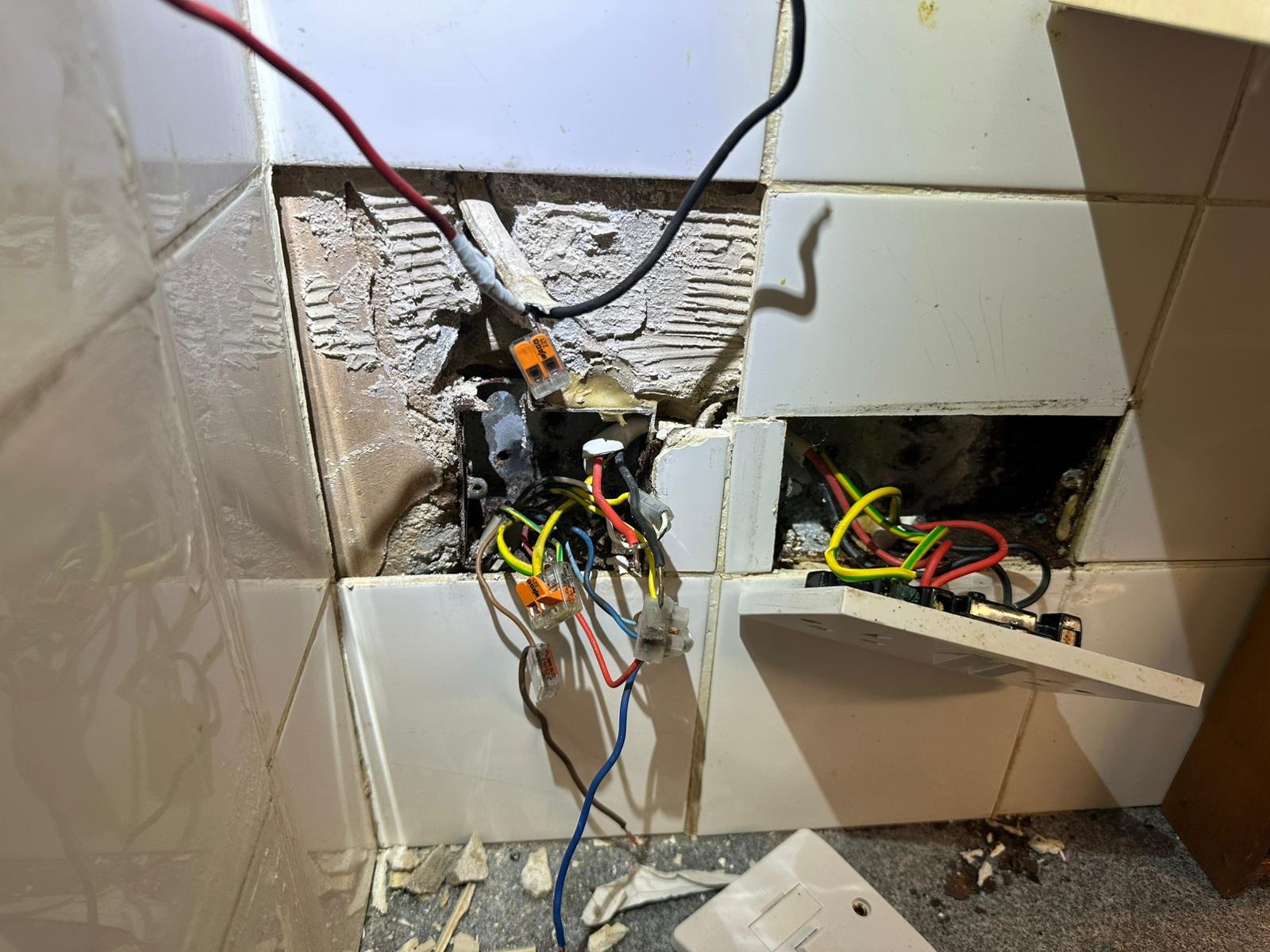
One socket or a whole run stops working while the breaker stays firmly on. Usually a loose terminal in a back box, a conductor broken inside its insulation where it has been flexed once too often, or a spur connection that has worked itself apart behind the faceplate. Continuity and polarity testing locates the break rather than guessing which socket to open first.
Lighting faults
Flickering, dimming, or several lights failing together. The common causes are a loose neutral at a ceiling rose, a dimmer module struggling with LED loads it was never designed for, or in older homes the borrowed neutrals left behind by two-way switching between floors. Each behaves slightly differently, and the pattern usually points at the cause before testing confirms it.
Intermittent faults
Works perfectly until it does not, and never while an electrician is standing there. These divide into thermal faults, which appear once something has run long enough to warm up, and moisture faults, which track the weather. Note the date, time and conditions each time it happens. Three entries usually tell us more than an hour of testing on a dry afternoon.
Neutral faults
The dangerous one. A broken or loose neutral lets the voltage across your circuits swing well above normal, and electronics fail in minutes rather than years. The warning signs are lights burning unusually bright or dim as other appliances switch on, and several unrelated items failing at once. Switch off and call us: this is not a fault to live alongside while you think about it.
Earth faults
Insulation breakdown letting current reach earthed metalwork it should never touch. It shows up as a tingle or a shock from a tap, a radiator or an appliance casing, or as an RCD that refuses to hold even with every appliance unplugged. Insulation resistance testing measures how far the insulation has degraded and identifies exactly which circuit is responsible.
Ring final continuity faults
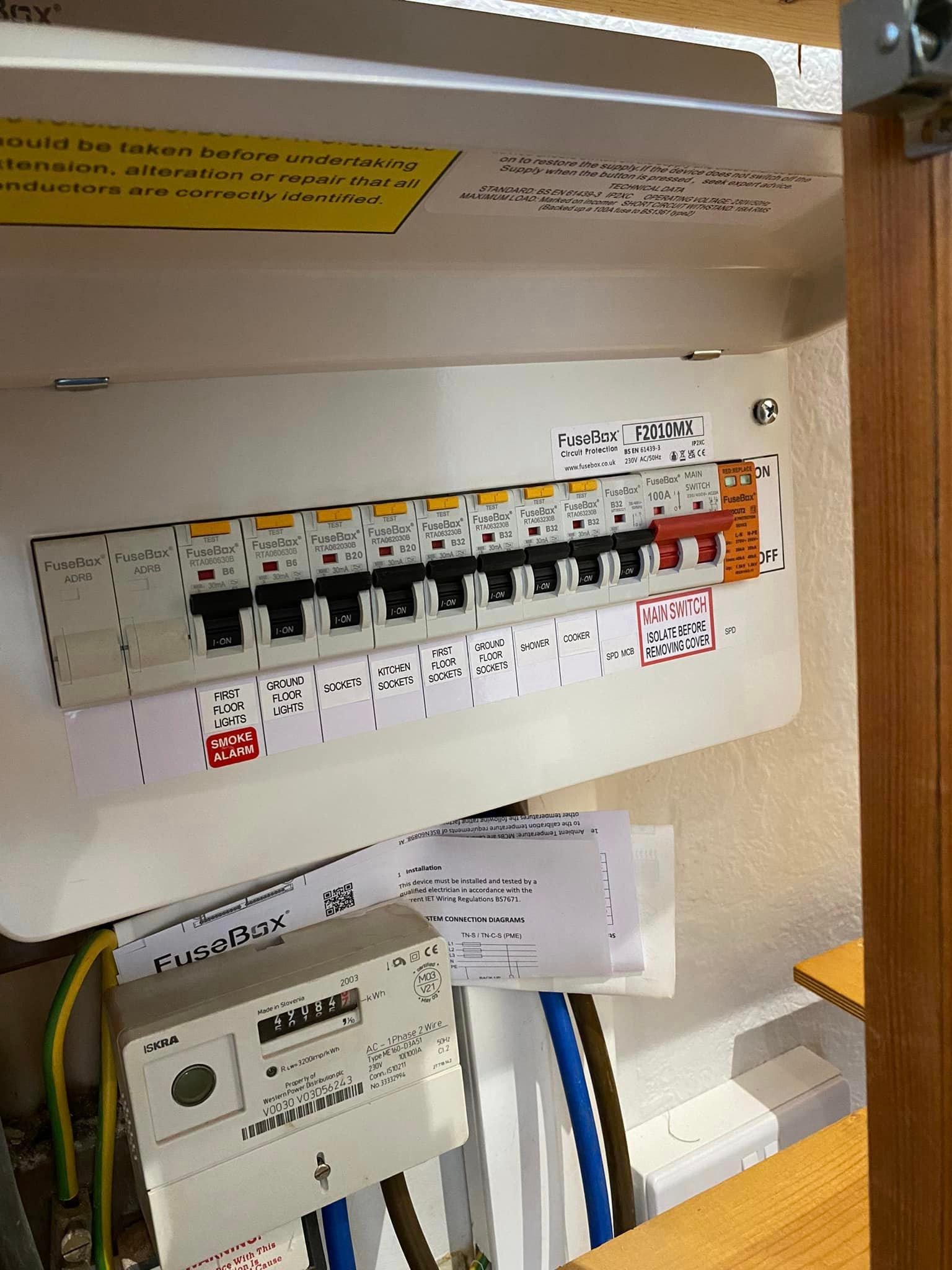
A ring circuit broken somewhere along its length, so it runs as two separate radials instead. Everything still works, which is why it goes unnoticed for years, but the cable is now carrying current it was never sized for and the overload protection no longer matches the circuit it is protecting. Only end to end continuity testing finds it.
The tests we run, and what each one proves
Fault finding is a sequence of measurements, and each one rules something out. This is the order and the reasoning.
Continuity of conductors
Proves the line, neutral and protective conductors are unbroken end to end, and confirms whether a ring circuit is genuinely a ring.
Insulation resistance
A test voltage between conductors measures how well the insulation is holding. Falling readings pinpoint damaged, damp or heat-damaged cable.
Polarity
Confirms line and neutral have not been swapped anywhere, and that switching and protective devices are in the line conductor where they belong.
Earth fault loop impedance
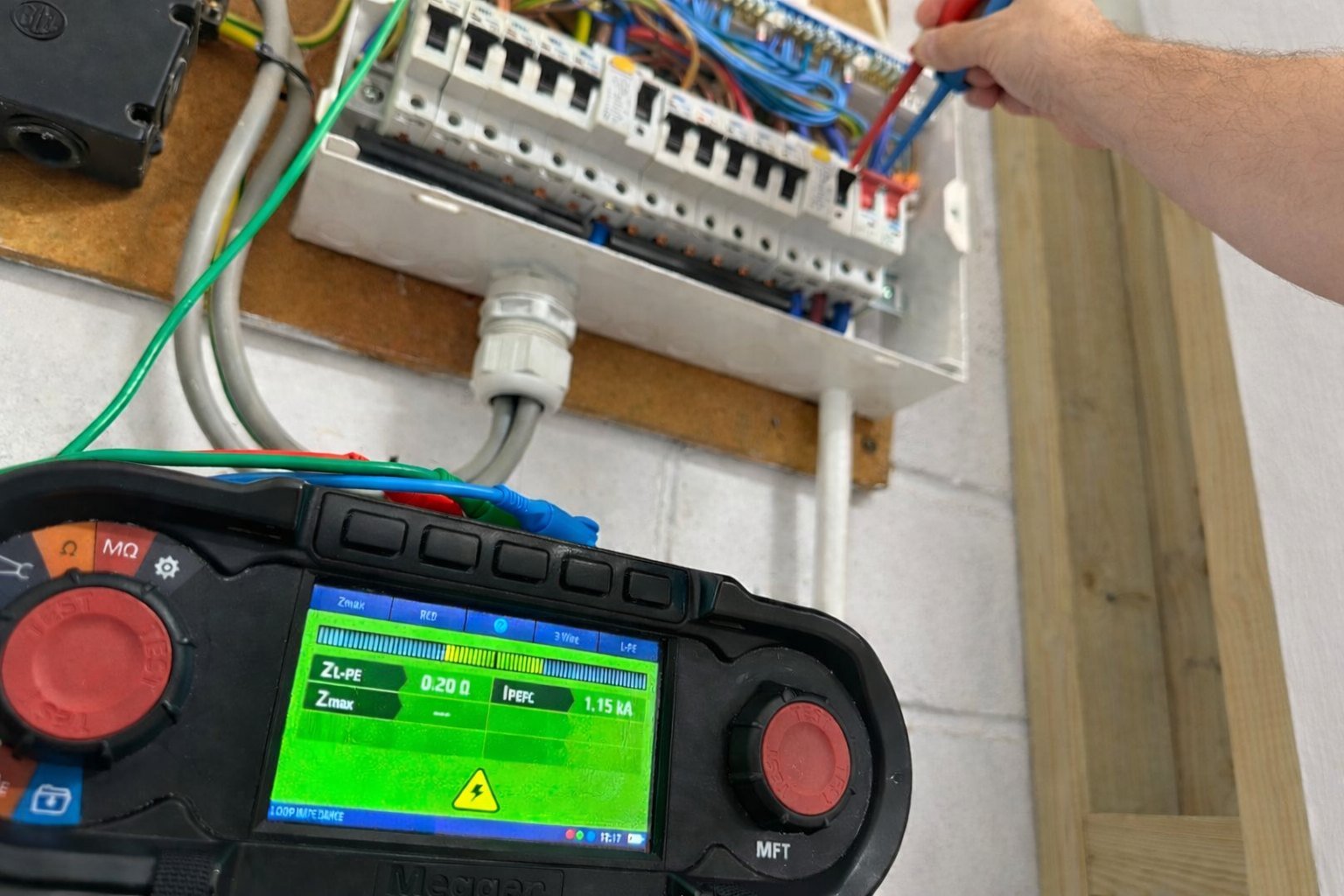
Measures the resistance of the fault path back to the supply, proving the protective device will actually disconnect fast enough in a real fault.
RCD trip timing
Times the device at its rated current and at five times that. A device that trips too slowly, or not at all, is protecting nobody.
Thermal and visual inspection
Discolouration, softened plastic and the smell of hot terminals often locate a fault before any instrument is connected.
Faults we trace every week
RCD tripping with nothing plugged in
Usually moisture in an outside circuit, a failing element, or borrowed neutrals in older lighting.
One dead socket, or a whole ring
A loose connection at a spur or a broken conductor at a back box, found with continuity and polarity testing.
Lights that flicker or dim
Loose neutrals, failing dimmers, or a poor connection in the supply that needs the network operator involved.
Burnt out connections
Overheated terminals at sockets, cooker points and consumer units, replaced and retested.
Damage from other trades
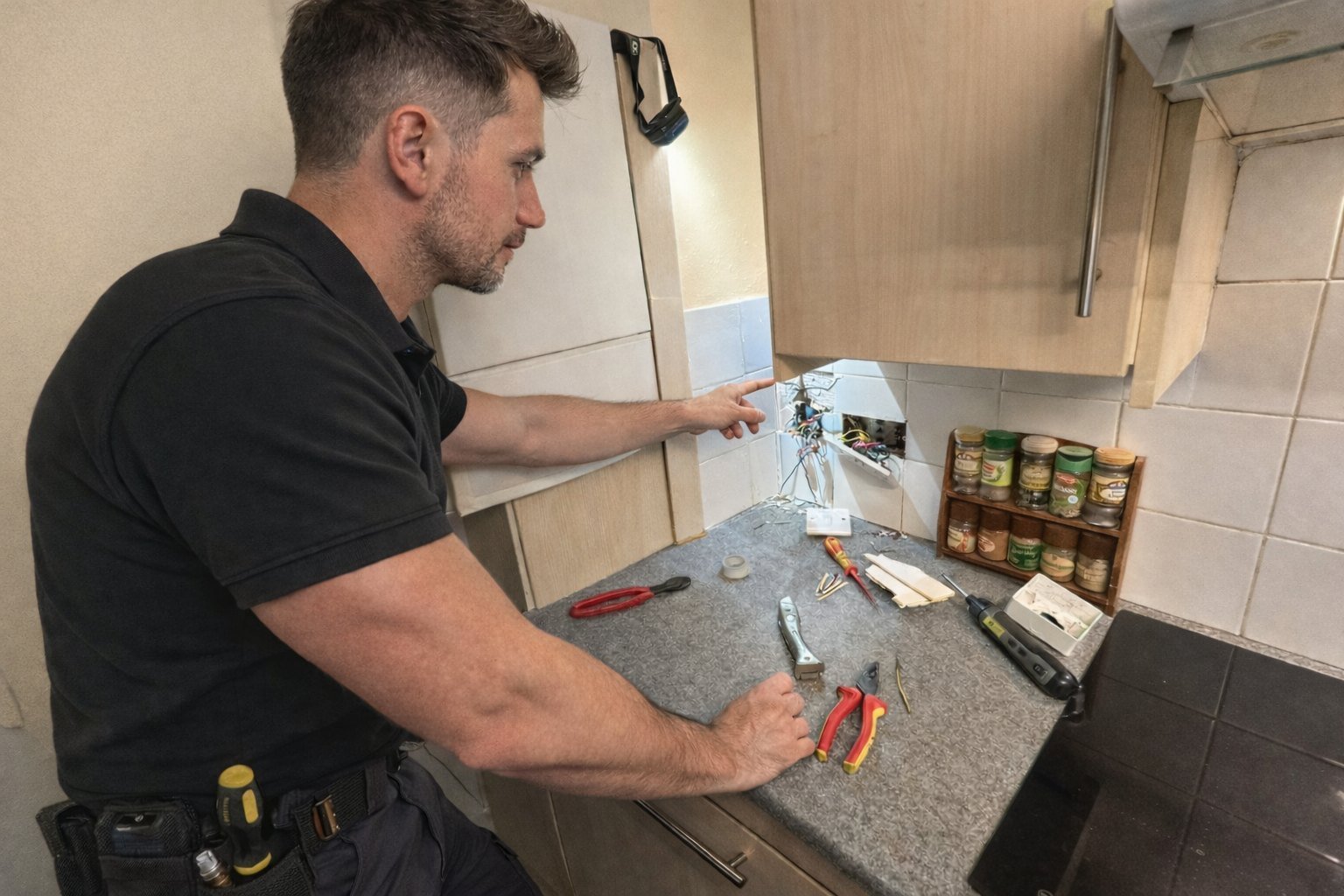
Screws and nails through cables during a kitchen fit or a floor being laid. We locate the strike and repair or reroute.
Faults after a leak
Water tracks a long way through a ceiling. We dry, test and prove every circuit affected before energising.
Diagnosis is the job
Swapping parts until the symptom goes away is expensive, and it rarely lasts. We measure instead: insulation resistance between every pair of conductors, continuity end to end, and trip times on every protective device that should have operated.
The readings go on the certificate, so the next electrician who opens the board can see exactly what was found and when.
Book fault finding
A second opinion that pays for itself
Told the whole house needs rewiring? We will test it and give you the numbers. Sometimes it is true. Often it is a single circuit.
About rewiring
Everything off, then one at a time
Switch off every breaker under the RCD that tripped, reset it, then bring circuits back one by one. The one that drops it is your suspect. If the RCD will not hold with everything off, the fault is in the board itself and it is time to stop.
The full methodLet the appliances confess
With the suspect circuit identified, unplug everything on it and try again. If it holds, plug items back one at a time. Immersion heaters, showers, washing machines and anything living outside are the usual culprits.
Why RCDs tripFixed wiring needs instruments
If the circuit trips with nothing plugged into it, the fault is in the cable or an accessory, and no amount of resetting will find it. That is an insulation resistance test, not a guessing game, and it is exactly what we come out to do.
Book fault findingHow professional fault finding works
The instruments and the method matter more than luck. This is what is actually happening while the power is off and the meter leads are out.
The insulation resistance test, in plain English
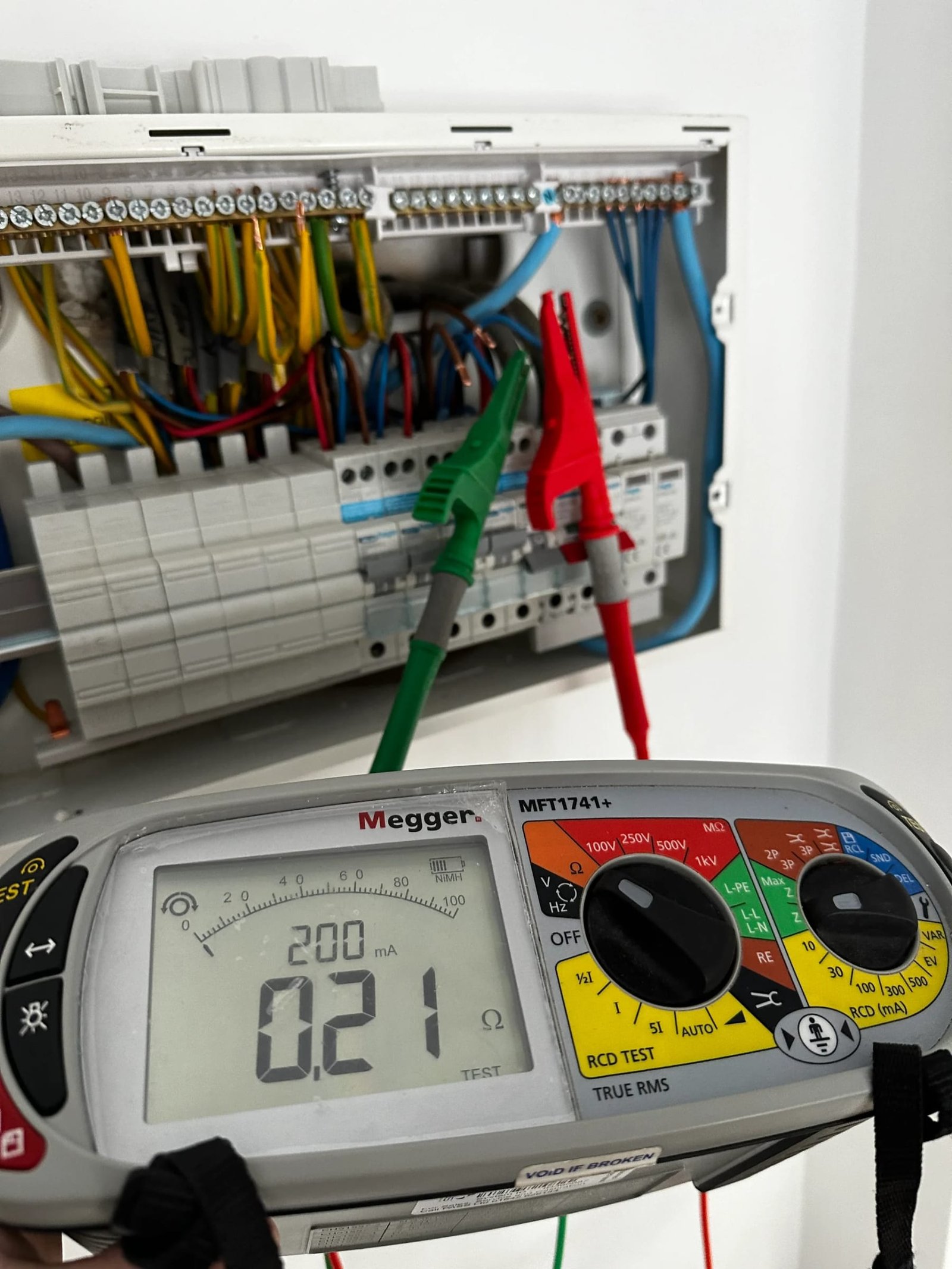
Cable insulation is only doing its job if almost no current can leak through it. We prove that by putting a test voltage, typically 500 volts DC, between the conductors and measuring how much sneaks across. The answer comes back in megohms, and bigger is better.
A healthy circuit reads in the tens or hundreds of megohms. The regulations set a floor of one megohm, but a reading anywhere near that floor is a circuit telling you something: moisture in a fitting, cooked insulation behind a heater, a nail nicking a cable, or a terminal packed with plaster dust.
The real skill is the splitting. By opening a circuit at its midpoint and testing each half, then halving again, a fault hiding anywhere in forty metres of cable is cornered in a handful of measurements rather than by pulling up every floorboard on the route.
Cornering an intermittent fault
The fault that never misbehaves while an electrician is standing there is a Sussex classic. The way through it is pattern, not patience.
- Trips under load: heat is involved. Suspect a connection that opens as it warms, or an element breaking down as it reaches temperature.
- Trips in wet weather: moisture is involved. Outside lights, garden sockets and shed supplies go to the top of the list.
- Trips at the same time of day: something switched is involved. Immersion timers, storage heaters and EV chargers all keep a schedule.
A note on your phone of the date, time and weather each trip happens is genuinely useful evidence. Bring us three entries and we will usually bring you a diagnosis.
How we work through it
Listen to the history
When it started, what changed, what makes it worse. Half the diagnosis is in what the property has had done recently.
Visual inspection
Boards, accessories and any accessible cable are checked for damage, overheating and previous poor workmanship.
Dead testing
With the supply isolated we measure continuity, polarity and insulation resistance circuit by circuit.
Live testing
Earth fault loop impedance, prospective fault current and RCD trip times confirm the protection will actually operate.
Repair and prove
The defect is repaired, the circuit is retested, and the results are recorded on a certificate for your records.
How a diagnosis runs
Three faults that look alike from the outside and turn out to be nothing of the sort once they are measured.
Illustrative examples of work of this type, written to show how a job runs. They are not records of individual customers.
Lights that fail only sometimes
Symptom: A run of lights drops out for a few minutes at a time, usually when somebody walks across the floor above.
What the testing shows: Continuity is checked while the suspect area is disturbed. An intermittent break shows up at a loose neutral in a ceiling rose, which reads fine at rest and opens under movement.
What we do: The connection is remade in a proper enclosure, continuity and polarity are proved across the circuit, and the readings go on the certificate.
A circuit that trips with no load on it
Symptom: The breaker drops even with every appliance unplugged, which rules out the usual suspects straight away.
What the testing shows: With the circuit dead and disconnected at both ends, insulation resistance between line and earth reads low. The fault is in the fixed wiring, not in anything the customer owns.
What we do: The circuit is split at the midpoint to halve the search, the damaged section is located and replaced, and the whole circuit is retested to prove the repair.
Half the sockets dead, no trip
Symptom: Several sockets stop working while the breaker stays up, which points at a break rather than a fault to earth.
What the testing shows: End to end continuity on the ring shows an open conductor. Cross connection and polarity checks narrow it to one accessory where the ring has been broken and left as two spurs.
What we do: The ring is made continuous again, every accessory on it is checked for the same treatment, and the circuit is retested and certified.
What fault finding costs
Diagnosis is charged for time, because nobody can price a fault they have not seen. Most domestic faults are traced within the first hour or two.
| Visit | What it covers | From |
|---|---|---|
| Daytime diagnostic visit | Call-out plus the first hour of testing | £95 |
| Additional testing time | Charged in half hour blocks | £60/hr |
| Out of hours diagnosis | Evening, overnight and weekend rates apply | £140+ |
| Repair after diagnosis | Quoted once the fault is proved, before work starts | Varies |
| Return visit for parts | No second call-out charge for the same fault | Labour only |
TO CONFIRM: replace with your own rates. If a fault turns out to be a supplier or network problem rather than yours, we say so and you are not charged for a repair we did not make.
Fault finding is not an EICR, and the difference matters
People often book the wrong one. Fault finding is targeted: something is wrong now, and we test until we find it. It answers one question quickly.
An EICR is a full condition survey of the whole installation, sampling every circuit against the current standard and producing a coded report. It answers the question how safe is all of this, and it is what landlords, buyers and councils ask for.
If your problem is a tripping RCD, book fault finding. If you need a document for a tenancy or a sale, book an EICR. If a fault turns up during an EICR, we quote the remedial work separately so the two never blur together on your invoice.
TO CONFIRM: add your scheme registration number, public liability cover and the name and qualifications of the electrician who reviewed this page. Only list credentials you can evidence.
Questions we get asked
Straight answers to the things people ask before they book. Anything else, the phone is quicker than a form.
How long does fault finding take?
Most domestic faults are traced within one to two hours. Intermittent faults that only appear in the rain or under load can take longer, and we tell you before the clock runs on.
Will you need to lift floors or chase walls?
Only where the testing points to it. Proving the fault first is precisely what keeps the damage to a minimum.
Can you find a cable buried in a wall?
Yes, with a cable tracer and detector. We can map a route accurately enough to avoid opening up more than a small patch.
Do you fix the fault the same day?
Wherever the parts allow. If a part has to come in, we make the installation safe and leave the rest of the property working.
My electrician says it needs a full rewire. Is that true?
Sometimes it genuinely is, but not always. We are happy to test and give you a second opinion with the readings to back it up.
What is a borrowed neutral, and why does it trip my RCD?
In some older installations, one lighting circuit quietly returns its current down a neighbouring circuit’s neutral, usually where two-way landing switches were wired between upstairs and downstairs circuits. Old fuses never noticed. An RCD compares flow and return on each circuit, sees the imbalance instantly, and trips. The cure is separating the circuits properly, not removing the protection that spotted it.
Why does the tripping only happen at night?
Because something on a schedule only runs at night. Immersion heaters on economy tariffs, storage heaters, EV chargers and heating pumps all wake up in the small hours, and cold, damp night air lowers the insulation resistance of any outdoor kit that is already marginal. Tell us the trip times and we can usually name the suspect before we arrive.
Can an electrical fault damage my appliances?
Yes. A loose or broken neutral is the dangerous one: voltages in the property can swing far above normal and take out electronics in minutes. If several appliances fail together, or lights burn unusually bright, switch off and call. It is also the strongest everyday argument for fitting surge protection when a board is upgraded.
Fault finding and repairs across Sussex
One emergency line covers every town below. Yours has a page of its own, with local response targets and the postcodes we reach.
Other things we fix

24 hour emergency call-outs
One number, answered by a person, day or night. If you have no power, a burning smell from a socket, or a fuse board that will not reset, this is the emergency electrician call-out you want. We cover Lewes and the rest of Sussex around the clock, including weekends and bank holidays.
Read more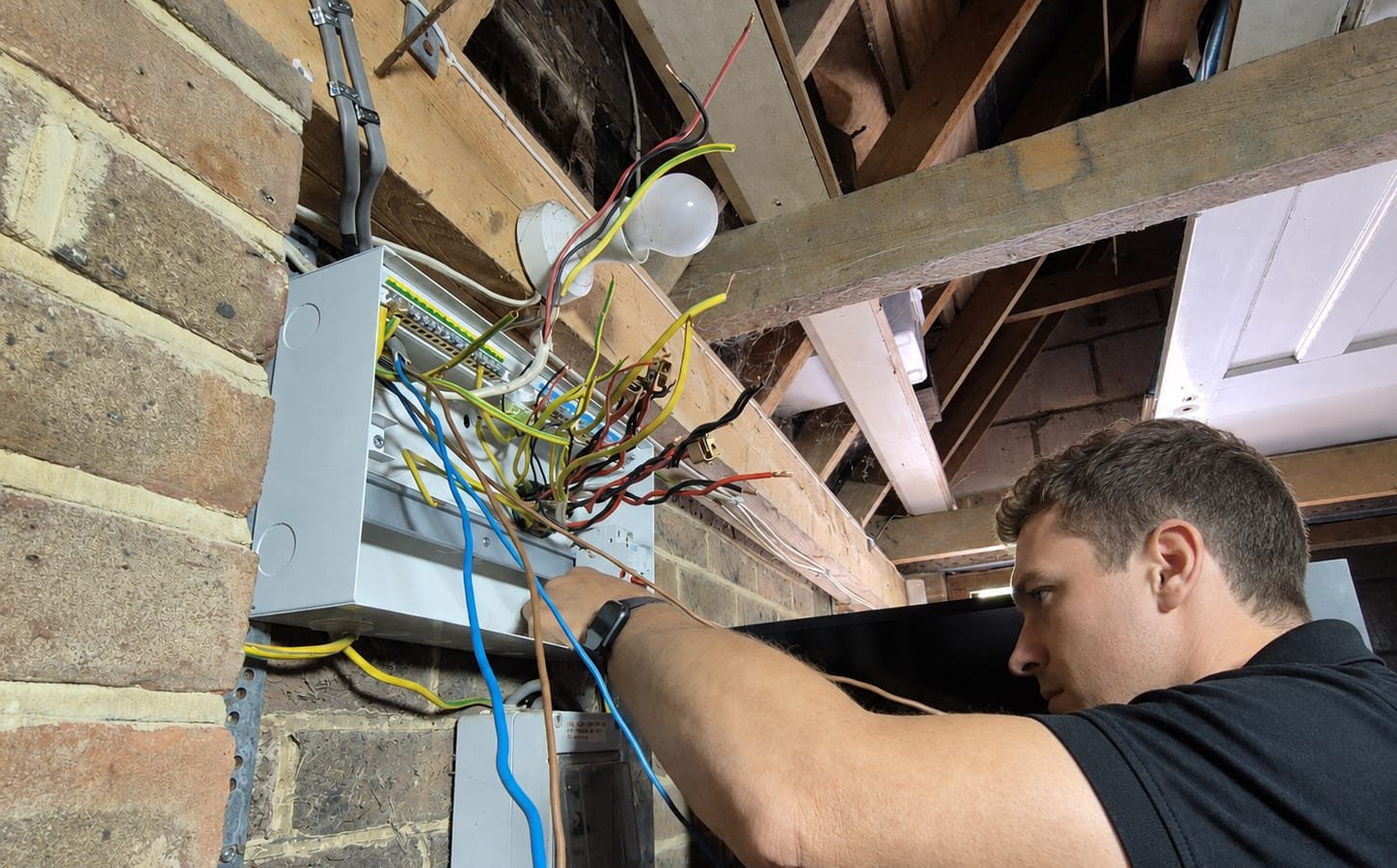
Fuse board and RCD upgrades
Fuse box replacement and consumer unit upgrades, from old rewireable fuses to a metal board with an RCBO on every circuit. A modern board protects each circuit on its own, so one faulty appliance no longer takes the whole house out. Tested, certified and notified under Part P, usually in a day.
Read more
Rewiring and part rewires
Full house rewires and part rewires for properties with rubber, lead or failing early PVC cable, or lighting circuits with no earth. Cable does not last forever, and the test readings tell you whether yours has anything left. Most rewires take two to five days, with power back on each evening.
Read moreSomething tripping and nobody can say why? Let us test it properly.
Trusted emergency electricians in Sussex
We have been covering Sussex for 25 years. In that time the wiring regulations have moved through several editions and consumer units have changed shape more than once, while the faults themselves have stayed much the same: loose connections running hot, tired cable, and protection that was never fitted in the first place.
That experience is the difference between guessing and knowing. It is also why we can usually tell you on the phone whether a fault needs a van tonight or a booking on Tuesday, which saves you the out of hours rate more often than you might expect.
TO CONFIRM: add the year you started trading, your scheme registration number and your public liability cover. Only list credentials you can evidence.